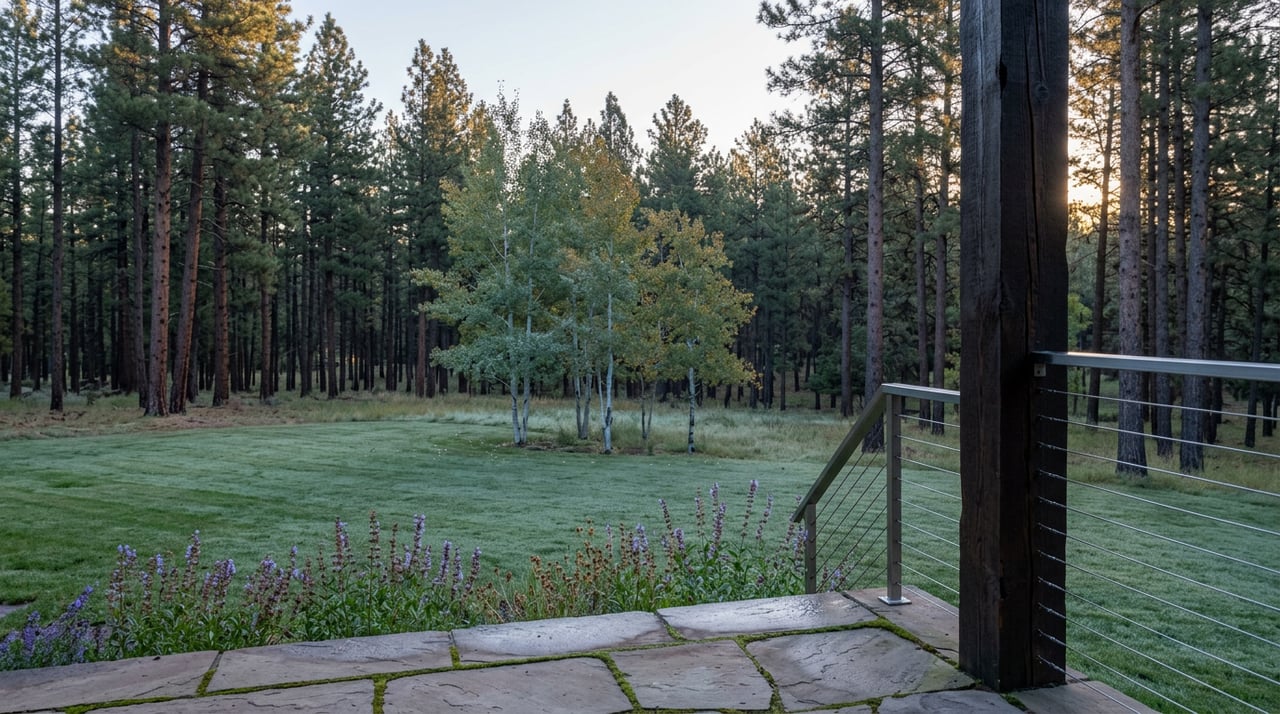
Fall wildlife viewing can seem like something you need to drive into the national forest to find, somewhere out there past the tree line. In Torreon, the bugling starts closer than that. The elk are already inside the loop roads before most residents have finished their coffee, and the real question isn't whether you'll hear one this September. It's whether you know the four places around the White Mountains to look for elk.
Why the Pines Start Talking in September
Bull elk spend the summer growing antlers in velvet, and by early August that process is finished. The velvet strips off, the antlers harden against tree trunks, and by early September the bulls are ready to compete for cows. What follows is the rut: bugling, harem gathering, and the kind of vocal display that carries for a surprising distance through open pine forest. A single bull typically collects fifteen to twenty cows, though the most dominant bulls can hold harems as large as thirty, depending on how much fight he's willing to put up to keep rivals away.
Torreon sits at roughly 6,200 feet, which matters more than it sounds like it should. Higher elevations stay cooler later into the month, and that cooler air tends to stretch bugling activity further into September than it lasts at lower elevations nearby. Peak activity across the White Mountains typically lands somewhere between September 15 and 25, but the exact week shifts a little with the weather each year. If this September runs warm, expect the loudest nights to land closer to the back half of the window rather than the front.
None of this requires you to leave the property to notice. Torreon's own community materials describe frequent elk and deer sightings around the Rendezvous section of the neighborhood, close enough to the golf course that some homeowners fence garden beds specifically to keep elk and deer from treating them as a snack bar. Golf season here typically runs from March through November, so most of the rut plays out while fairways are still active. Don't be surprised if a round gets paused for a bull elk crossing between the Tower and Cabin courses.
Four Stops Around the White Mountains
For residents who want more than a lucky sighting from the driveway, the White Mountains around Torreon offer a specific circuit. Each stop has a different rhythm, and knowing which one to hit at which hour makes the difference between a distant bugle and an actual view.
| Stop | Distance from Torreon | Best Time | What You'll Find |
|---|---|---|---|
| Fool Hollow Lake Recreation Area | About 5 miles from Torreon | Dawn, especially through October | Shoreline meadows where elk feed early; the rut here runs September into October, alongside a second good window after calves are born each May |
| Pintail Lake | About 8 miles north via AZ-77 | Dusk | Marsh edges that draw elk and mule deer as the light fades |
| Pinetop-Lakeside Recreation Department area | About 13 miles south via AZ-260 | Early morning | A reliable stretch of the White Mountains where sightings are common enough to plan around |
| Sipe White Mountain Wildlife Area | Farther out, deeper into the White Mountains | Dawn walks, fall through winter | Open bluffs and grasslands where elk roam more visibly than in dense timber |
Fool Hollow is the easiest habit to build into a weekend because it doubles as a lake with fishing and camping, so a dawn elk-watching trip can turn into a full morning without much extra planning. Pintail Lake works better as an evening stop on the way back from errands in town, since the marsh edges pick up elk activity as the sun drops. The Pinetop-Lakeside stretch rewards patience more than timing precision, and Sipe is worth the longer drive if you want open bluffs and grassland instead of dense timber, since elk there roam more visibly across open ground.
Reading the Calendar the Way the Elevation Does
The mistake most newcomers make is treating late September as the only window worth watching. Fool Hollow's own seasonal pattern runs into October, and the cooler nights at Torreon's elevation tend to keep bulls vocal a little longer than they stay active in the lower valleys around Show Low. If the first hard frost holds off, expect the rut to extend rather than compress.
Timing within a single day matters as much as timing within the month. Elk are most active in the first and last hours of daylight, which is when bugling carries best across open meadow and forest edge. A trip to any of the four stops above between roughly 6 and 7:30 in the morning, or the hour surrounding sunset, will consistently outperform a midday visit.
When the Rut Comes to You Instead
Plenty of residents never have to leave Torreon to get their fall elk fix, and that convenience comes with a few practical adjustments worth making before the season peaks.
- Give any elk you encounter real distance, especially bulls. Rutting behavior makes them more tolerant of noise and less predictable around people, and an animal that looks calm one moment can turn territorial the next.
- Keep dogs leashed on walking paths this time of year. A curious dog reads as a threat to a bull guarding a harem, and the resulting standoff rarely goes well for the dog.
- If you garden, a simple fence line does more good than any repellent. Elk and deer will treat unprotected beds as part of the buffet, and Torreon residents who've dealt with this already know a few feet of fencing solves most of it.
- Resist the urge to feed or approach an animal that seems unusually calm around people. Wildlife biologists are consistent on this point: a tame-looking elk is not a safe one.
The Arizona Game and Fish Department and Arizona State Parks both publish general guidance on rut-season behavior worth a quick read if you're new to the area, since bull elk during breeding season behave differently than they do the rest of the year.
The Short Version
You don't need to plan a trip into the Apache-Sitgreaves National Forest to catch this year's rut. The circuit runs through four named spots around the White Mountains, each with its own best hour, and there's a decent chance the show starts on your own street before you ever get in the car. Keep the dog on a leash, fence the tomatoes, and pay attention around dawn and dusk for the next few weeks. The bulls will do the rest.
If you're curious what else changes around Torreon as the seasons turn, or you're weighing whether this community fits the way you want to live day to day, Torreon Home Sales knows the rhythms here better than most. Let's connect.