Show Low Bluff sellers have spent the last two years hearing that pine-canopy lots sell themselves. That was true when supply was thin. It is not the story the June 2026 numbers tell, and it is not the story buyers' underwriters are telling either.
Here is the shift worth understanding before you list: in a market where a buyer can walk to the next listing, the two contingencies that now decide whether your deal closes on time are not price and appraisal. They are insurability and septic. Both are solvable, but only if you handle them before the sign goes in the yard.
The market number that changed the negotiation
Navajo County's sale-to-list ratio slipped from 97.6% in May 2026 to 97.2% in June 2026, with months of supply sitting at 5.7. Show Low anchors the county's inventory with roughly 148 active single-family listings heading into summer 2026. In March 2026, Show Low's median sold price was $475,000 on 19 closes with a median of 36 days on market.
Read those together. A balanced-to-buyer-leaning market with elevated inventory means buyers can, and do, write inspection and insurance objections they would have swallowed in 2022. That is where the friction lives now. The Navajo County market summary is explicit about what closes cleanly in the forested southern county: pre-list inspections, defensible-space photos, and a current insurance binder in the seller's hand.
The insurance problem starts before the appraisal
Wildfire underwriting is no longer a background concern for Bluff parcels sitting in ponderosa canopy. Arizona's Department of Insurance and Financial Institutions issued a mandatory Wildfire Data Call under A.R.S. §20-123 requiring every insurer to report transactional policy data for calendar years 2025 and 2026 in areas the Department of Forestry and Fire Management has designated as heightened wildfire risk, with 2025 data due April 1, 2026. Regulators are counting non-renewals, cancellations, and new-policy declines at the ZIP-code level. Carriers know that. Their appetite has narrowed accordingly.
The Central Arizona Association of Realtors reported in January 2026 that many carriers have stopped writing new policies in certain high-risk mountain areas, and that Arizona homeowners premiums rose an estimated 48% statewide between 2021 and 2024. University of Arizona Cooperative Extension research on non-renewals shows Navajo County had a sharp non-renewal spike in 2022, with some Arizona counties hitting single-year non-renewal rates as high as 4.8%.
For a Show Low Bluff transaction, this changes the buyer's timeline. A buyer's insurance broker now runs an ISO Public Protection Classification lookup and a fire-line score on the specific address, not the general area. Arizona DIFI notes that 38 Arizona communities currently sit at ISO PPC Class 8B or worse, that insurers typically will not insure Class 10 properties, and that an individual property can carry a different classification than its community based on distance from a fire station or water source. When a buyer's binder comes back with a surcharge, an exclusion, or a flat decline, the offer either renegotiates or dies. If the seller finds this out at the ten-day mark, it is a fire drill. If the seller found it out before listing, it is a marketing point.
Zone 0 belongs in your listing file
The single most productive thing a Show Low Bluff seller can do this summer is document the home ignition zone the same way you would document a roof or an HVAC. Navajo County's Firewise guidance uses the three-zone framework developed by retired USDA Forest Service fire scientist Jack Cohen:
| Zone | Distance from structure | What buyers' underwriters look for |
|---|---|---|
| Immediate (Zone 0) | 0 to 5 feet | Non-combustible ground cover, no wood mulch touching siding, clean roof and gutters, no branches over the roofline |
| Intermediate (Zone 1) | 5 to 30 feet | Grass under four inches, spaced shrubs, LPG tanks with ten feet of clear bare soil plus another ten feet without flammable vegetation |
| Extended (Zone 2) | 30 to 100 feet | Thinned canopy, ladder fuels removed, dead vegetation cleared |
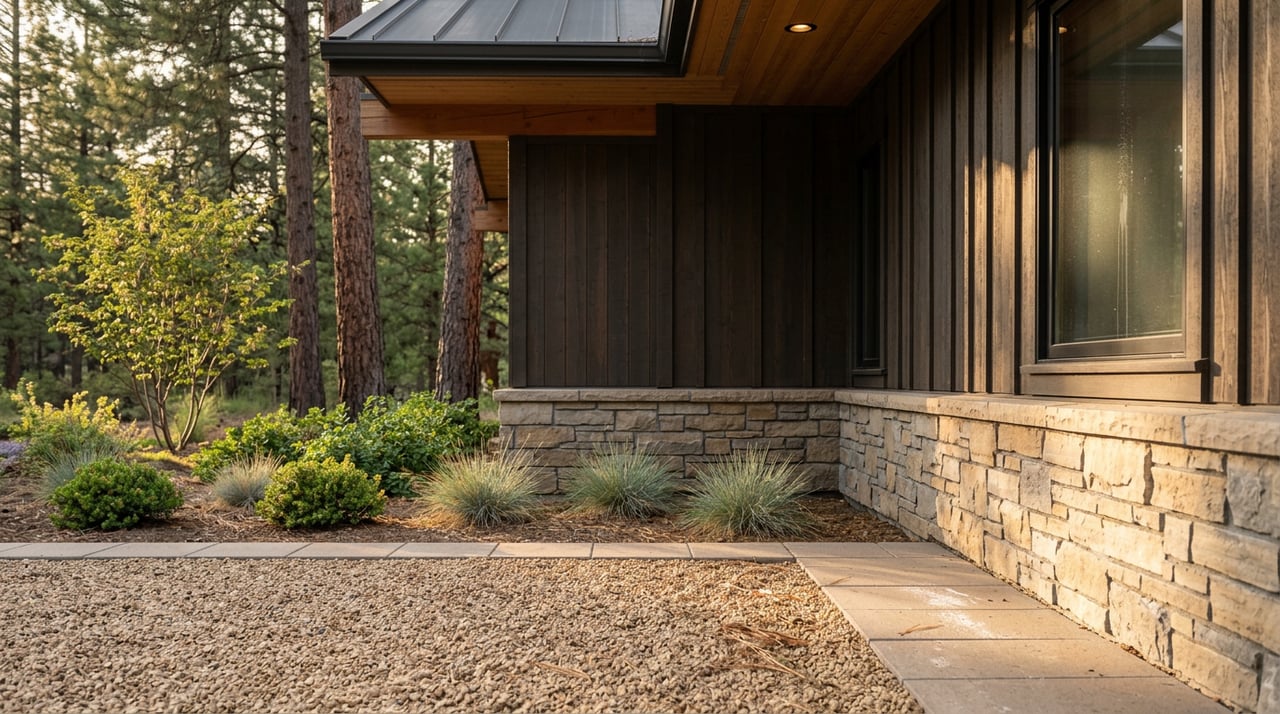
Zone 0 specifics come straight from the Arizona Fire Marshals Association: gravel, pavers, or concrete instead of combustible mulch, dead debris cleared from roofs and gutters, and branches trimmed ten feet from chimneys and stovepipes. Zone 1 tops out at 30 feet or the property line, whichever comes first. Zone 2 runs to 100 feet.
If your Bluff parcel already carries Firewise USA recognition through a neighborhood group, say so in the listing. Arizona has more than 215 Firewise USA sites, and a carrier that sees the designation is measurably more willing to bind. If your parcel does not, the City of Show Low's Forest Health and Wildfire Mitigation page links the defensible-space, fire-resistant landscaping, and Firewise plants PDFs a seller can use to build a small evidence packet: dated photos of each zone, receipts from any thinning or limb-up work, and a note on the ISO PPC classification pulled by your insurance agent.
Mercury Insurance's Arizona wildfire guide put a hard number on the exposure context: 2,162 wildfires burned more than 280,000 acres across state, federal, and tribal lands in Arizona in 2024. Underwriters read that number too.
The septic and well surprise
Show Low Bluff parcels commonly run on private well and septic. That is a feature until it becomes an inspection line item. Local operators point to specifics buyers now request in writing.
JLG Septic notes that Show Low's high water table and porous limestone create particular challenges for drain-field performance, that septic tank replacement typically becomes necessary after 30 to 40 years, and that homes with a kitchen garbage disposal often need pumping every two to three years rather than the standard three to five. On a home built in the late 1980s or early 1990s, those numbers matter. A buyer's inspector who opens a tank that has not been pumped in six years is not writing a repair request. That inspector is writing a system-replacement question.
The pre-list version of this problem is straightforward. Pump the tank with a licensed local operator, keep the receipt, and put it in the disclosure file. Atteberry Portable Toilets & Septic has been running the Show Low area for more than 15 years. JLG Septic and TheBridge Septic Tank Services are actively working the market. Roto-Rooter Show Low at 928-537-3123 handles combined plumbing and septic dispatch on the same call, which matters when a main-line backup turns out to involve the tank.
Wells raise their own questions. Flow rate and potability tests from within the last year answer them before a buyer's lender asks.
The pre-list packet that closes cleaner
Put this in a single PDF and hand it to your agent before photos are shot:
- Current homeowners insurance declarations page and the carrier's willingness to renew, in writing
- ISO PPC classification for the address, from your agent or broker
- Dated photos of Zone 0, Zone 1, and Zone 2 defensible space around the structure and any outbuildings
- Any Firewise USA community documentation, tree-thinning invoices, or fire-department assessment
- Most recent septic pump-out receipt and, if applicable, the original perc test and permit
- Well flow-rate and potability test from the last twelve months
- Roof age and any Class A rating documentation
- Ember-resistant vent screen or non-combustible fencing upgrades, receipted
None of this is a legal disclosure workaround. It is marketing that respects the buyer's due diligence. In a market where the June 2026 sale-to-list ratio is running under 98%, sellers who supply this packet spend less time in renegotiation and finish closer to list.
If you are the buyer writing the offer
The same shift cuts the other way. A buyer walking a Bluff listing without an insurance-contingency clause is trusting that the last policy will renew for the next owner. Under current carrier appetite, that is a bet, not a plan. Get a binder quote before you remove your inspection contingency. Walk the property with the Zone 0 through Zone 2 framework in hand. Ask when the septic was last pumped and when the well was last tested. If the seller does not know, that is your answer.
FAQ
Does a Firewise USA designation actually lower my premium? Not automatically. What it does is expand the pool of carriers willing to quote at all. The DIFI homeowners page is direct that some insurance companies are more willing to write coverage for a home whose owner has taken measurable steps to reduce wildfire risk. Document the work, share it with your agent, and ask them to shop it.
How much defensible-space work do I need to do before listing? Enough to photograph credibly and enough to answer an underwriter's questions honestly. Zone 0 is the highest-leverage five feet on the property. If you cannot get to full Zone 2 thinning before listing, prioritize the ember-vulnerable zone against the house and disclose what remains.
Is the market actually softer, or is this just seasonality? Both, but the softening is real. Navajo County sale-to-list moved from 97.6% in May 2026 to 97.2% in June 2026 with months of supply at 5.7, which is balanced territory. Show Low's inventory heading into summer 2026 sat at roughly 148 active listings, the deepest in the county. That combination gives buyers leverage they did not have in 2022.
Ready to price the work against the payoff
Every Bluff parcel is different, and the right pre-list sequence depends on the age of the septic system, the canopy density on the lot, and what your current carrier is telling you at renewal. If you want a walkthrough that separates the moves worth making from the ones that will not change your close, Torreon Home Sales is happy to sit down with you and your carrier before you list. Let's connect.